- Have a happy new year!
& - If you use your personal vehicle for business purposes, go out to your car and take an odometer reading. (yes, I sure do know how to party! 😊)
Business use of personal vehicle expenses for unincorporated businesses
(aka self-employed people/sole-proprietors)
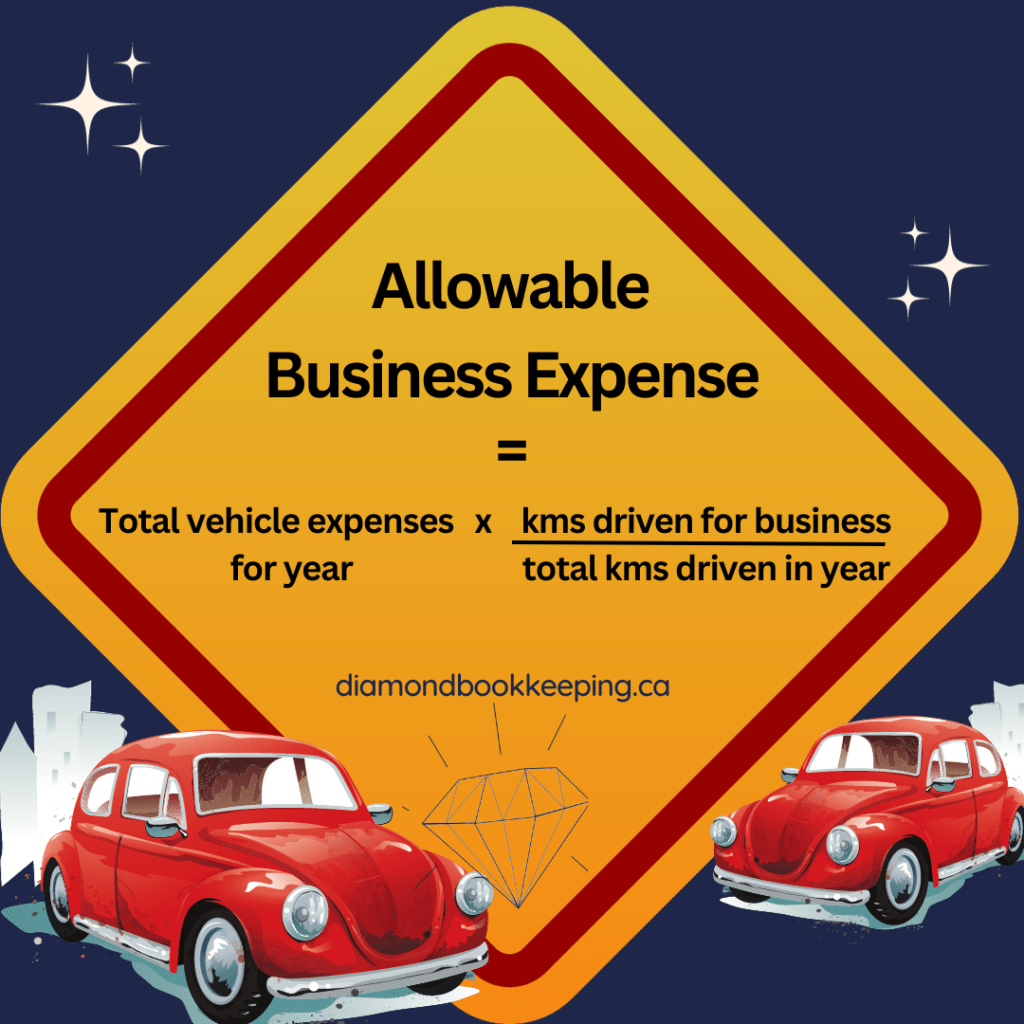
The CRA has specific rules around how to claim business use of personal vehicle expenses For self-employed people, the gist of things is that you can claim a portion of your overall vehicle expenses based on how much you used the vehicle for personal vs business purposes over the course of the year. This portion is determined by mileage, so it’s like this:
This means you have a few things you need to do:
- You need to take an odometer reading at the beginning of the year (just after midnight tonight works!) and an odometer reading at the end of the year. This gives you the total number of kilometres you’ve driven this year.
- You need to keep a log book of all the business driving you do in the year. This should include the date, the purpose of the trip, where you went, and how many kilometres you drove for the trip. You should take an odometer reading at the beginning and end of each business trip.
- You need to keep all your vehicle expense receipts so we can tally them up at tax time. This will include things like fuel, oil, interest on car loans, insurance, licensing and registration fees, maintenance and repair costs, leasing expenses, and even electricity for zero-emission vehicles.
A few outliers:
- Parking costs related specifically to business activities are considered fully a business expense, so keep those receipts! For this, the entire expense can be claimed.
- The cost of supplemental business insurance on your personal vehicle is also fully claimable (i.e. you can claim 100% of it, not just a percentage like other expenses).
- Please note that, while insurance coverage is outside my scope of practice, I still want people to know the importance of being properly insured. In general, our car insurance covers us for personal use of our vehicle. If we are also using it for business purposes, we need to let the insurance company know so we’re properly covered in case of a problem.
Business use of personal vehicle for corporations
People who use their personal vehicle to do business activities on behalf of their corporation can claim expenses differently. In this situation, keep a log book of the dates, the purposes of trips, where you went, and how many kilometres you drove for all business trips. You should also take an odometer reading at the beginning and end of each business trip. The corporation can then reimburse you based on a per kilometre rate set out each year by the CRA
Have a very happy 2024!

 Diamond Bookkeeping Services
You must be logged in to post a comment.